



Gold (XAUUSD) jumped 3.2% to $4,812 per ounce in early Asian trade on Wednesday after US President Donald Trump suspended planned bombing of Iranian energy infrastructure for two weeks, easing immediate escalation fears while keeping pressure on Tehran to reopen the Strait of Hormuz. The precious metal reversed prior-session losses as traders priced in reduced near-term supply disruption risks, though the ceiling on gains remained capped by shifting Federal Reserve rate expectations.
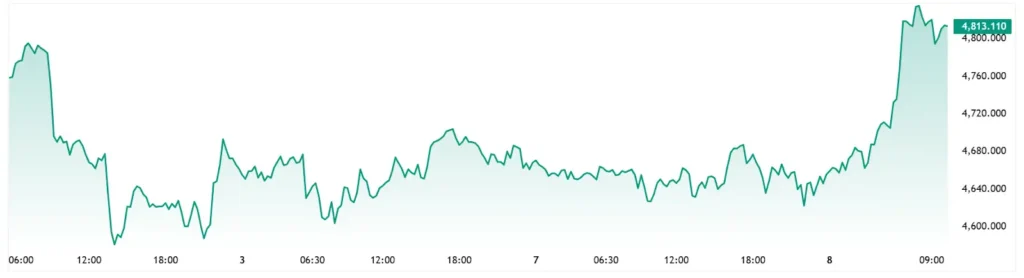
XAUUSD – 5 Days Chart
Event Details
Trump announced the pause via Truth Social late Tuesday, accepting a mediation proposal from Pakistan that grants a 14-day extension to his 8 pm Eastern deadline for Iran to end its Gulf oil blockade. The suspension is conditional on Tehran guaranteeing safe passage through the strategic waterway, which has been largely closed since late February amid US-Israeli attacks on Iranian military and nuclear sites. Iran responded by committing to secure transit via the strait for two weeks and confirmed negotiations with Washington will begin April 10 in Islamabad.
Market Snapshot
Spot gold (XAUUSD) climbed to $4,812.09 by mid-morning Singapore time, marking its strongest intraday gain since early March. The move erased most of the 2% decline logged over the prior two sessions as safe-haven demand moderated on de-escalation signals.
Brent crude fell 13.8% to $94.19 a barrel as the ceasefire prospect eased premium linked to supply disruption risks, though the benchmark remains up more than 40% year-on-year. US West Texas Intermediate (WTI) tracked lower, shedding similar percentages from Tuesday’s volatile close above $112.
US equity futures pointed higher, with S&P 500 and Nasdaq 100 contracts advancing as risk appetite improved on reduced geopolitical tension. The 10-year Treasury yield (US10Y) edged lower to 4.24%, reflecting diminished inflation hedge demand and renewed appetite for duration.
Policy Response and Risk Flows
Gold’s rally was tempered by expectations that the Federal Reserve may hold rates steady if inflation pressures ease alongside oil prices, limiting the non-yielding metal’s appeal.
Currency markets saw the dollar index (DXY) slip 0.4% as safe-haven flows reversed, while the Japanese yen (JPY) and Swiss franc (CHF) gave back prior gains. Silver (XAGUSD) outperformed, rising 4.5% to $73.20 an ounce on dual industrial and monetary demand.
Macro Implications
The de-escalation lowers near-term inflation risks tied to oil supply shocks, potentially giving the Fed more room to assess data before its next policy move. However, analysts warn that any breakdown in talks or failure to fully reopen the strait could reignite supply fears and push Brent back above $110, reigniting gold’s bid.