



The Canadian dollar weakened on Monday as crude prices eased and the U.S. dollar held firm on expectations the Federal Reserve will stay cautious on rates. The loonie’s slide reflected its sensitivity to oil and the widening appeal of the greenback in a market still focused on the Fed’s policy path.
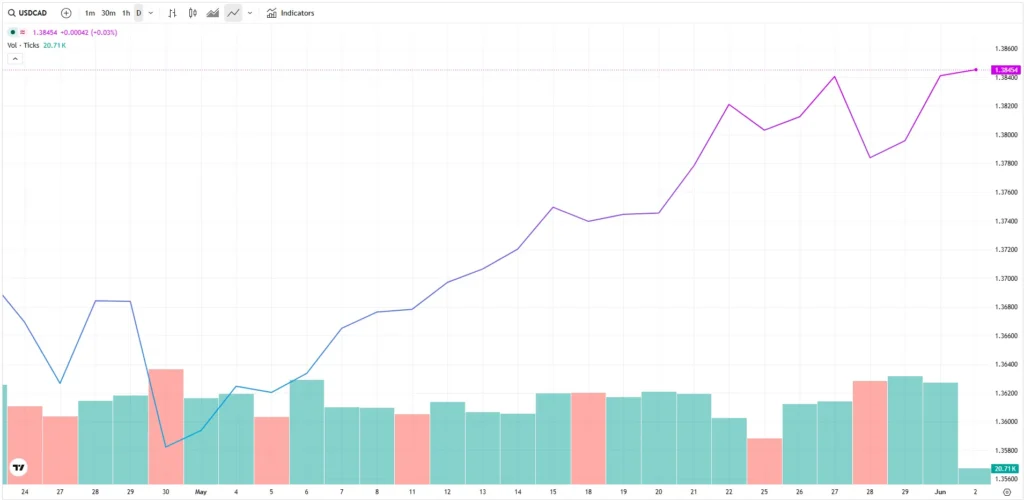
Market snapshot
USD/CAD rose as the Canadian currency lost ground, with traders citing softer oil prices and a firmer U.S. dollar as the main drivers. The move added to a recent pattern in which lower crude prices have removed support for the loonie, while Fed rate-cut bets have remained uneven.
A weaker Canadian dollar often tracks falling oil because Canada is a major crude exporter and energy receipts help underpin foreign-exchange demand for the currency. That link has remained visible in recent trading, with Reuters noting that CAD has weakened when oil prices fall and strengthened when crude rebounds.
Oil pressure
Crude markets eased as traders weighed a mix of supply, demand and geopolitical signals, trimming one of the Canadian dollar’s main supports. The FXStreet source said oil prices could regain ground if Middle East tensions shift again, but the immediate tone favored a softer loonie.
“CAD is getting hit from both sides right now — lower oil and a still-resilient U.S. dollar,” one trader said. “Until crude stabilizes, USD/CAD can keep drifting higher,” another said, reflecting the market’s near-term bias toward dollar strength.
Fed and rates
The Fed outlook also weighed on sentiment, as investors continued to debate how quickly U.S. policy might ease relative to the Bank of Canada. Reuters polls in recent months have shown strategists expecting the U.S. dollar to soften only if Fed cuts arrive and broaden, while the loonie may struggle when the BoC is already near the end of its own easing cycle.
That backdrop matters for rate spreads, which influence capital flows into USD/CAD. A slower pace of Fed easing can keep U.S. yields comparatively attractive, reducing pressure on the dollar and leaving commodity currencies underperforming.
Broader flows
The move in CAD likely supported the greenback against other currencies as well, while leaving risk-sensitive assets more exposed to the decline in oil-linked sentiment. In this type of market, equities tied to energy can outperform even as broader risk appetite softens, while safe-haven currencies tend to draw more demand.
For Canada, the macro implication is straightforward: weaker oil can reduce export earnings, soften growth momentum and complicate the inflation outlook if imported prices move higher through the currency channel. That can leave the Bank of Canada with less room to sound dovish if the currency weakness becomes persistent.
What to watch
Traders will watch:
- Further moves in Brent and WTI, especially any geopolitical headlines that reverse the oil slide.
- U.S. data and Fed commentary that could shift rate-cut expectations and the dollar’s tone.
- Bank of Canada signals on whether softer growth or a weaker loonie changes its policy stance.