



The EURJPY Exchange Rate continues to show bullishness, despite an expected rate hike from the Bank of Japan this week.
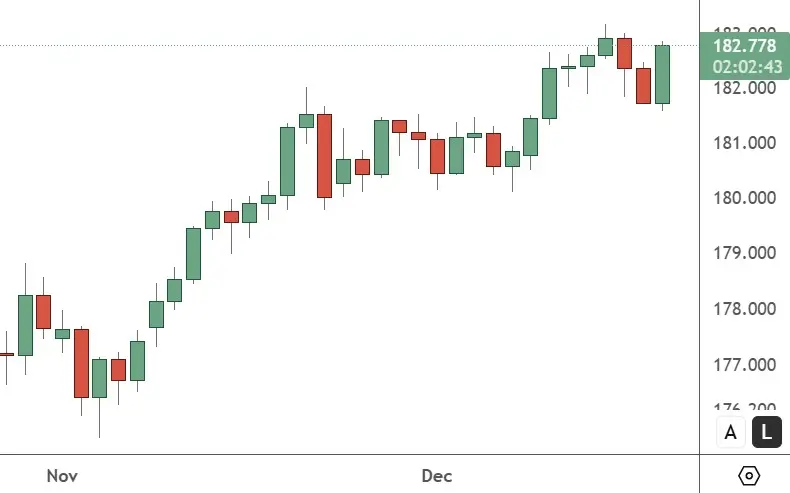
EURJPY – Daily Chart
The EUR/JPY has shaken off two consecutive bearish days with a strong rally on Wednesday. That should be a springboard for further highs.
The BOJ is expected to raise rates to their highest level since 1995 on Friday, but doubts linger about how many more times they can rates. Investors are not getting too bullish on the yen for that reason.
Investors have fully priced in just one 25-bps rate hike by the BoJ in 2026, while they see other central banks having room to cut. The Japanese government has just enacted a large stimulus spending package and would not want to see rates increased too fast.
However, the recent drop in the yen may indicate that the BOJ is trying to deter yen bulls with talk of higher borrowing costs.
“The BOJ’s rate hike stealthily normalizes the yen, unwinding the carry trade fuel that’s greased global risk assets for years, flipping liquidity from a gush to a grind,” Czhang Lin at LBank Labs.
The carry trade has involved borrowing the Japanese yen, which has remained at a near-zero interest rate for decades, and investing it in higher-yielding assets. The BOJ’s guidance on future rate cuts will be an important focus for traders this week.
Japan’s lower house last pushed through another extra budget worth 18.3 trillion yen ($118 billion) to finance a major stimulus package for households. But over 60 percent of the planned spending will come from government borrowing, raising fears over the country’s debt load.
The ratio of debt to gross domestic product (GDP) is the highest among major economies, with the IMF projecting it to hit 232 percent this year. Yields on 30-year bonds reached a record high last week, while 10-year yields hit their highest level in 19 years.
Strategists at Rabobank said “a few gradual hikes in early 2027” could come from the ECB after the eurozone economy gains momentum.
That is helping to power the euro higher against the yen as traders see limited potential for BOJ hikes over the medium term.