



Crude oil prices fell on Monday as a modest recovery in shipping through the Strait of Hormuz eased immediate supply concerns, outweighing the market impact of expanded U.S. economic measures against Iran. Brent crude fell 2.5% to $90.35 a barrel by 1656 ET, while U.S. West Texas Intermediate lost 2.4% to $84.95.
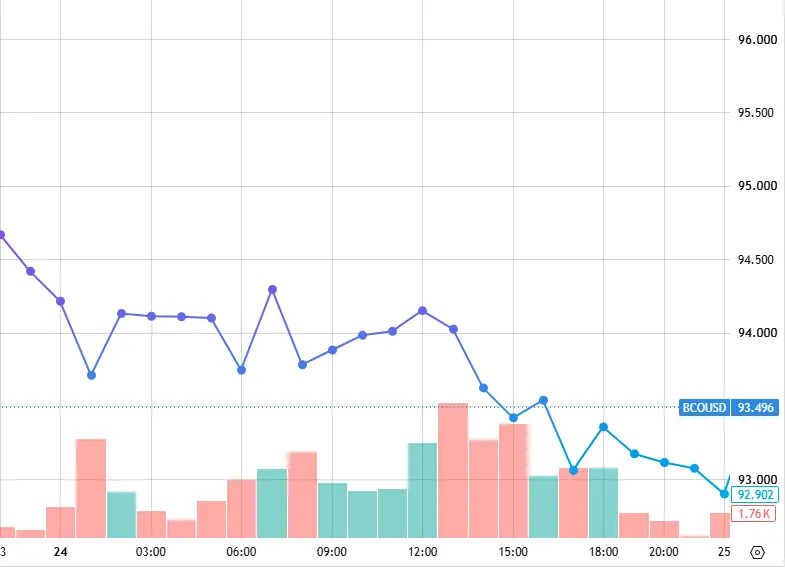
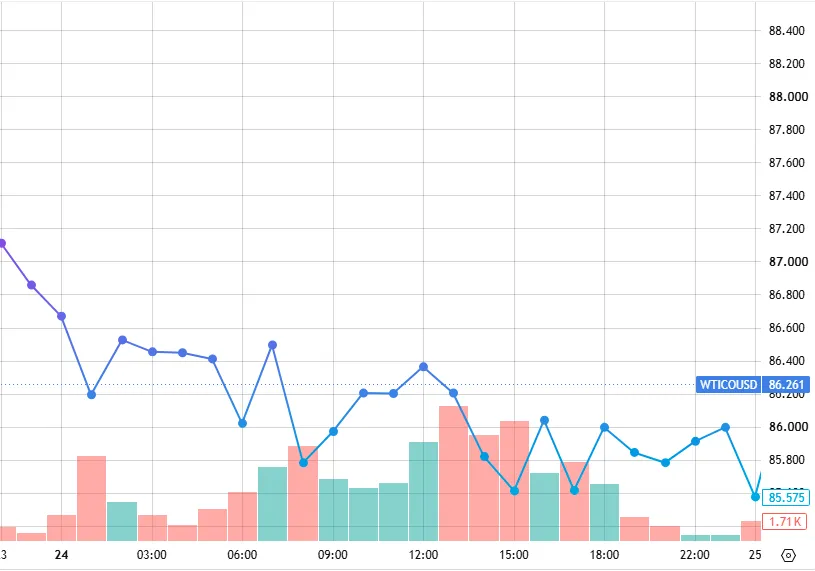
Market Snapshot
The declines followed sharp gains last week, when Brent rose more than 7% and WTI added nearly 6% amid fears that restricted access to Hormuz could disrupt oil exports from the Gulf.
The Strait of Hormuz is a key route for seaborne energy trade. Traders have closely tracked vessel movements there as tensions between Washington and Tehran have raised risks to supplies and freight costs.
Hormuz Traffic Improves
Iran allowed an unspecified number of Iraqi oil tankers to pass through the waterway after requests from Baghdad, according to Iranian media reports. Shipping-tracking data also pointed to a small increase in crossings.
Kpler data showed 121 vessel crossings last week, up 2.5% from the preceding week. However, the number of laden vessels fell 27%, suggesting that trade flows remain well below normal levels despite the improvement. Sanctioned crossings rose to 16 from nine.
“The increase in vessel movements offers some relief to a market that had priced in a more immediate supply shock,” said an energy-market analyst. “But the lower number of loaded ships shows that normal export operations have not yet resumed.”
U.S. Sanctions Campaign
The United States on Monday announced “Operation Economic Outcast”, a broader sanctions campaign aimed at restricting Iran’s access to oil revenue and international financial networks. Treasury Secretary Scott Bessent said the measures would target entities linked to Iranian trade, including networks in shipping, aviation, technology, gold and digital assets.
The campaign could have wider implications for countries and companies that continue commercial ties with Iran. China and India are among Iran’s major trading partners, while any tougher enforcement against banks, insurers, shippers and commodity buyers could complicate payments and physical oil deliveries.
Iranian officials said Tehran would retaliate if the economic pressure continued. Mohsen Rezaee, secretary of Iran’s National Security Council, said oil exports through Hormuz and the wider Persian Gulf could be halted if the economic conflict escalated.
Shipping Risks Persist
The improvement in Hormuz traffic has not removed broader regional security risks. Shipping remains exposed to attacks in the Red Sea, where Iran-backed Houthi forces have repeatedly targeted commercial vessels.
A Saudi oil tanker was reportedly struck by a projectile west of Yanbu, according to a Yemeni military official and a report received by the United Kingdom Maritime Trade Operations.
“Oil prices are likely to remain highly reactive to confirmed disruptions rather than political statements alone,” said a crude trader. “The market will be watching whether any incident reduces actual export volumes or forces more vessels to reroute.”
Inventory Backdrop
The U.S. Department of Energy said crude holdings in the Strategic Petroleum Reserve fell by 3.7 million barrels in the week to Aug. 21, leaving stocks at 289.7 million barrels, their lowest level since November 1982.
The United States has been drawing from emergency reserves as part of a co-ordinated release involving International Energy Agency member countries, intended to cushion the effect of supply disruption and limit energy-price pressures.
Outlook
Traders will watch whether Hormuz crossings continue to recover and whether laden tanker traffic follows. They will also assess the enforcement scope of U.S. secondary sanctions, Iran’s response, and further security incidents affecting shipping in the Gulf and Red Sea.