


S&P 500 Movement Overview
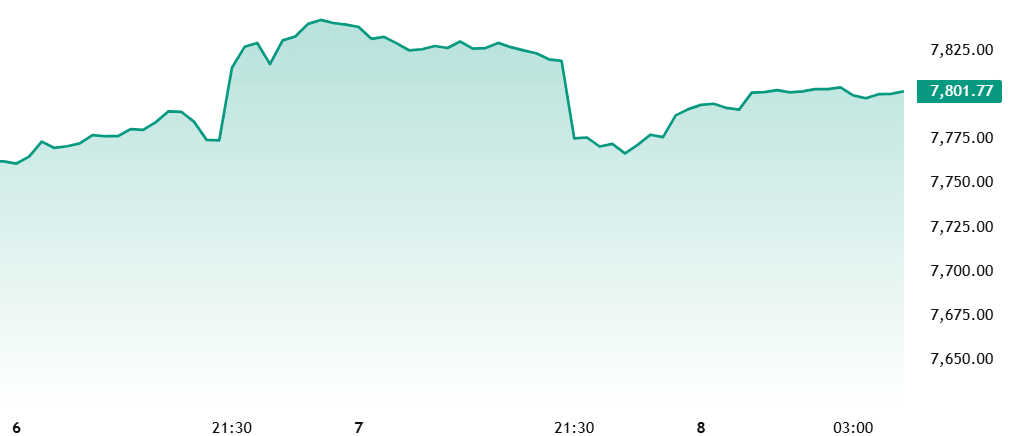
The S&P 500 ended Wednesday’s session on 07 October 2026 0.22% lower at 7,801.77, below the record close set a day earlier. The Federal Reserve released minutes of its September meeting the same day. They showed most policymakers see another interest rate increase as likely appropriate by year end. Market data is as of the US close on 07 October 2026 (04:00 UTC+8, 08 October 2026).
Key Driver Behind The Move
The minutes showed all Federal Open Market Committee participants supported raising rates in September. Most judged that a further increase would likely be appropriate by year end. Participants stressed that they approached each meeting with an open mind and that future decisions would depend on incoming information.
Almost all participants assessed that inflation risks were tilted to the upside and that risks to the labor market had diminished. Fed Chair Kevin Warsh said after the September decision that the hike would support a timelier return to the committee’s long-term inflation target.
Market Data And Reaction
The reaction to the minutes was muted. The S&P 500 was little changed from its pre-release level, and Treasury yields showed little response. Earlier in the session, the 10-year Treasury yield reached its highest level since early 2002, having risen 28 bps since 16 September. It eased from that peak after a Treasury auction of 10-year notes drew solid demand, which helped equities pare their losses.
Broader Market Implications
Expectations for the Fed’s next move had already softened before the minutes. Recent comments from New York Fed President John Williams and Vice Chair Philip Jefferson, a weak jobs report and inflation data that came in below forecasts had cut the odds of a hike at the October meeting, although inflation remains elevated. CME FedWatch pricing showed markets strongly favoring a hold at that meeting.
The wider bond sell-off remains a pressure point. According to Investing.com, it has been driven by concerns about an oil-driven inflation shock, heavy corporate borrowing to fund artificial intelligence infrastructure, expectations of hawkish central bank action and fiscal strains in countries such as France.
Many policymakers noted that financial conditions still appeared supportive of growth, with equity prices having risen substantially this year and corporate bond spreads narrow. A rebound in the AI trade and expectations of a strong earnings season have also supported risk sentiment.
What Equity Traders Should Watch
- The FOMC’s next meeting, which ends on 28 October 2026, according to the Fed’s calendar.
- The direction of long-dated Treasury yields, which have recently been near multi-decade highs.
- Oil prices, given the inflation concerns cited in the report.
- The start of the corporate earnings season.