


Gold prices edged lower on Monday after hotter US inflation data strengthened expectations for a Federal Reserve rate increase this week, while a sharp rise in oil prices added to concerns about persistent price pressures. Spot gold was down 0.3% at $4,335.98 an ounce at 21:29 ET, while gold futures fell 0.7% to $4,376.92.
Market Snapshot
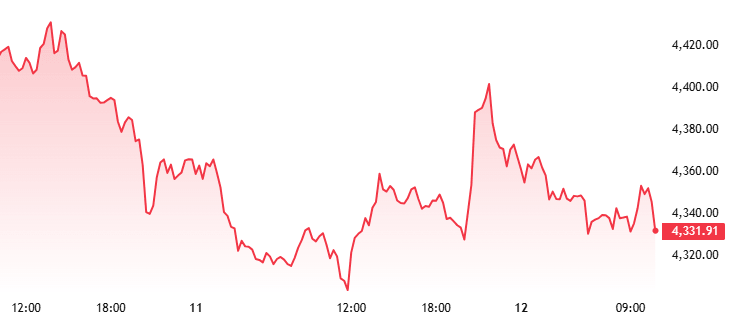
Gold was trading near $4,340 an ounce after falling for a third consecutive week. Bullion declined 1.8% last week, despite recovering during Friday’s session.
Silver fell 0.7% to $64.09 an ounce, while platinum slipped 0.3% to $1,792.63. The US Dollar Index edged 0.1% higher to 99.19, adding modest pressure to dollar-denominated precious metals.
Gold has remained volatile after reaching above $4,500 earlier in the month. Investing.com data showed spot gold trading between $4,292.35 and $4,402.56 on September 11, highlighting the wide daily range as markets reassessed the interest-rate outlook.
Hotter Inflation Revives Fed Rate Hike Bets
The main catalyst was the August US consumer price report. Core CPI, which excludes food and energy, rose 0.3% month on month, reinforcing expectations that inflation remains above the Federal Reserve’s 2% target.
Markets were pricing roughly an 86.7% probability of a rate increase at the Fed’s upcoming meeting. A higher policy rate can weigh on gold because the metal does not pay interest, increasing the relative appeal of yield-bearing assets.
The inflation picture has also become more complicated because of higher energy prices. Brent crude was trading near $107 a barrel after gaining almost 9% last week as conflict in the Middle East disrupted energy markets.
Higher Oil Prices Add To Inflation Pressure
Oil’s rise has created a difficult backdrop for the Fed. Higher energy costs can feed through to transport, production and consumer prices, potentially making inflation more persistent even if underlying economic demand remains moderate.
The US 10-year Treasury yield was around 4.97% in Monday trading, while the 30-year yield was above 5.36%. Elevated yields increase the opportunity cost of holding non-yielding assets such as gold.
The dollar remained relatively firm, with the Dollar Index near 99.19. A stronger dollar can also weigh on gold by making the metal more expensive for holders of other currencies.
Yields And Dollar Weigh On Gold
Gold’s recent decline reflects a shift in the balance between competing forces. Higher yields, a firmer dollar and stronger expectations for Fed tightening have reduced some of the support that gold received from lower-rate expectations.
At the same time, geopolitical risks have not disappeared. The conflict in the Middle East continues to affect energy markets, while uncertainty surrounding shipping through the Strait of Hormuz has kept demand for defensive assets in focus.
That creates a more complex environment for gold. Inflation-linked pressure from oil can increase expectations for tighter monetary policy, while geopolitical disruption can support demand for gold as a safe-haven asset.
What Gold Traders Should Watch
Gold traders will monitor the Federal Reserve’s policy decision and guidance closely after markets raised the probability of a rate increase to about 88%. The accompanying projections and comments will be important in assessing how policymakers view the persistence of inflation.
US Treasury yields and the dollar will remain key market variables. Sustained strength in yields could increase pressure on gold, while any change in rate expectations could quickly alter demand for the metal.
Traders will also watch oil prices and developments around the Strait of Hormuz. Further energy-market disruption could keep inflation concerns elevated, while any easing in geopolitical tensions could reduce the safe-haven support that has helped cushion gold’s recent losses.