



The US dollar steadied on Wednesday as investors awaited August inflation data that could influence the Federal Reserve’s next policy decision, while the Japanese yen remained near a seven-month high. USD/JPY traded around 153.65 after the yen strengthened to 152.89 earlier in the week, its strongest level since February, as markets increased bets on further Bank of Japan tightening.
Market Snapshot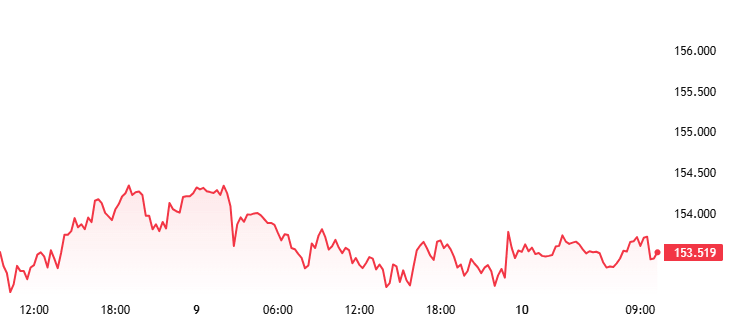
The US Dollar Index (DXY) traded near 98.15, close to its lowest level in almost two weeks, as investors reduced dollar exposure ahead of Friday’s US consumer price index report.
USD/JPY remained under pressure after falling from levels near 160 earlier in the month. The yen has gained roughly 4% in September, supported by expectations of a more hawkish Bank of Japan, a reduction in yen-funded carry trades and possible repatriation flows from Japanese investors.
Other Asian currencies also strengthened against the dollar. The Australian dollar (AUD/USD) traded around 0.7225, close to a four-month high, while the New Zealand dollar (NZD/USD) gained towards 0.5862 as broader dollar weakness supported regional currencies.
CPI Report Becomes Key Fed Test
Markets are focused on the August US CPI report, which will be the final major inflation indicator before the Federal Reserve’s September policy meeting.
Economists expect the data to determine whether inflation pressures are continuing to ease or whether higher energy costs and other price pressures could delay policy changes. A stronger-than-expected inflation reading may reinforce expectations for tighter policy, while softer data could increase pressure for rate cuts.
Recent labour-market data has complicated the outlook. A stronger-than-expected August jobs report increased market expectations for a potential Federal Reserve rate hike, with traders pricing roughly a 60% chance of a 25-basis-point increase at the September meeting.
Higher interest-rate expectations have supported US Treasury yields, but the dollar has struggled to gain momentum as investors weigh inflation risks against signs of slowing economic activity.
Yen Strengthens On BOJ Rate Expectations
The yen’s rally has been driven by growing expectations that the Bank of Japan could continue raising interest rates.
Markets are pricing a high probability of a 25-basis-point BOJ rate increase at the September meeting, with investors expecting policymakers to continue normalising monetary policy as inflation and wage growth remain elevated.
Japan’s economy also showed stronger momentum, with second-quarter GDP growth revised higher to an annualised 1.4%, compared with an earlier estimate of 1.1%. The stronger growth data has strengthened the case for further BOJ tightening.
The narrowing interest-rate gap between Japan and the United States has reduced one of the key drivers behind the yen’s prolonged weakness over recent years.
Carry Trades And Intervention Risks Return
The yen’s rapid recovery has also pressured investors holding yen-funded carry trades.
The strategy involves borrowing yen at relatively low interest rates to invest in higher-yielding assets. As the yen strengthens, these positions can become less attractive and may force investors to unwind trades, creating additional demand for the currency.
Japanese officials continue to monitor currency volatility after previous intervention efforts. Markets remain alert to whether Tokyo could respond if excessive yen movements return.
A stronger yen provides relief by reducing import costs, but rapid appreciation could create challenges for exporters by lowering the overseas value of earnings.
Oil Prices Add Inflation Complexity
Rising energy prices have added another challenge for policymakers.
Brent crude approached $100 a barrel as escalating Middle East tensions raised concerns over potential supply disruptions. Higher oil prices could keep inflation elevated and complicate decisions for central banks including the Federal Reserve and Bank of Japan.
The combination of stronger oil prices and uncertainty over inflation has kept bond markets cautious, with investors closely watching whether higher energy costs translate into broader price pressures.
Outlook
The next major driver for currencies will be Friday’s US CPI report. A weaker inflation reading could increase expectations for easier Federal Reserve policy and further pressure the dollar, while a stronger result could support yields and revive dollar demand.
Traders will also monitor the Federal Reserve’s September meeting, Bank of Japan communication and USD/JPY levels around the 152 to 153 range.
The direction of the yen will depend on whether BOJ tightening expectations continue to build and whether investors continue unwinding carry trades. Meanwhile, movements in oil prices and Treasury yields will remain key factors shaping global currency markets.