



Brent Movement Overview
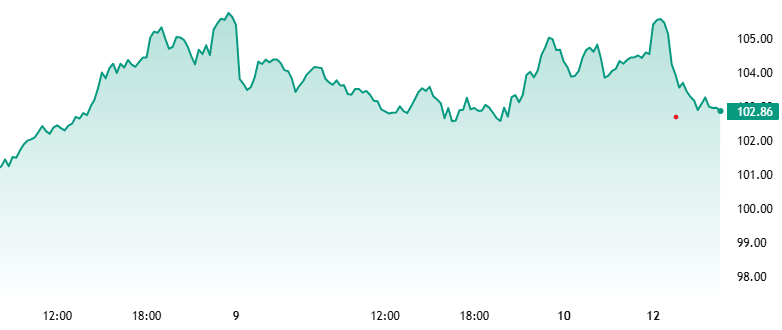
Brent crude slipped early on Monday after President Trump announced an energy ceasefire between Russia and Ukraine over the weekend. December Brent futures fell 1.2% to $103.49 a barrel as of 07:55 UTC+8 on 12 October 2026. Kyiv and Moscow have not confirmed the agreement. Middle East tensions limited the decline.
Key Driver Behind The Move
The prospect of fewer disruptions to Russian fuel supplies weighed on prices. Ukraine has stepped up attacks on Russian refining and shipping infrastructure in recent weeks, which has caused major disruption to global diesel supplies. Trump also pressed Kyiv to halt strikes on Russian refineries. Separately, he announced a diesel supply deal with Russia on Friday, aimed at easing pump prices. Trump had also announced an energy ceasefire in mid-September that neither side confirmed.
Market Data And Reaction
Profit-taking after last week’s gains added to the pressure on crude. Gains in the prior week had come as Middle East tensions stayed high. The pullback was modest because supply risks in the region remain unresolved.
Broader Market Implications
Supply concerns in the Middle East continue to offset the ceasefire news. Tanker attacks in the Strait of Hormuz persisted, and Iran described a recent US proposal to reopen the waterway as insufficient. Clashes between Saudi Arabia and Yemen’s Iran-backed Houthis also continued, with further Houthi attacks on Riyadh over the weekend, including on a major airport. With the Russia-Ukraine agreement unconfirmed, the ceasefire’s effect on supply remains uncertain, while Hormuz disruptions continue to support prices.
What Oil Traders Should Watch
- Confirmation or denial of the energy ceasefire from Kyiv and Moscow
- Any change in the US-Iran position on reopening the Strait of Hormuz
- Further attacks on tankers in Hormuz or on Saudi infrastructure
- Whether the reported US-Russia diesel supply deal eases fuel prices