


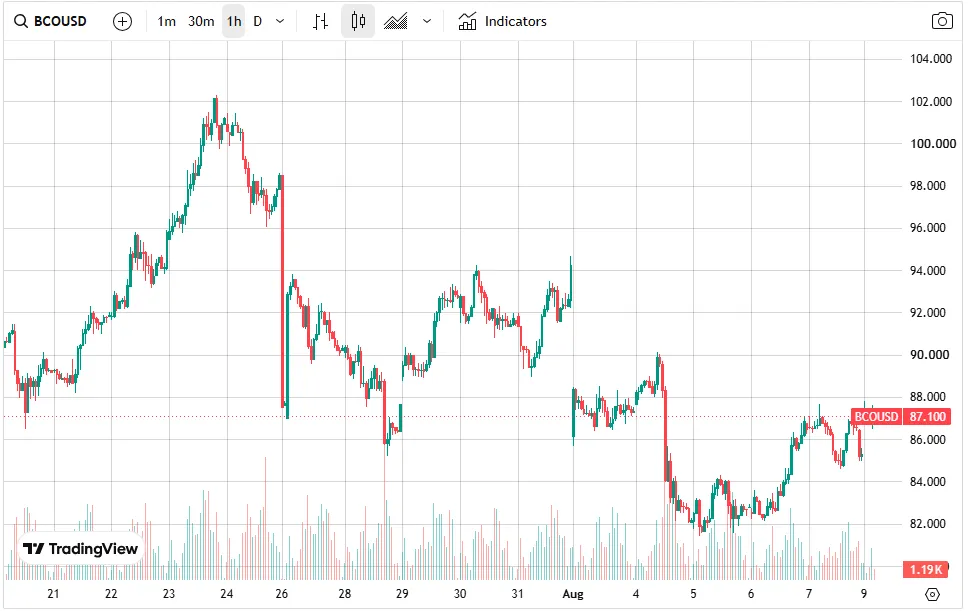
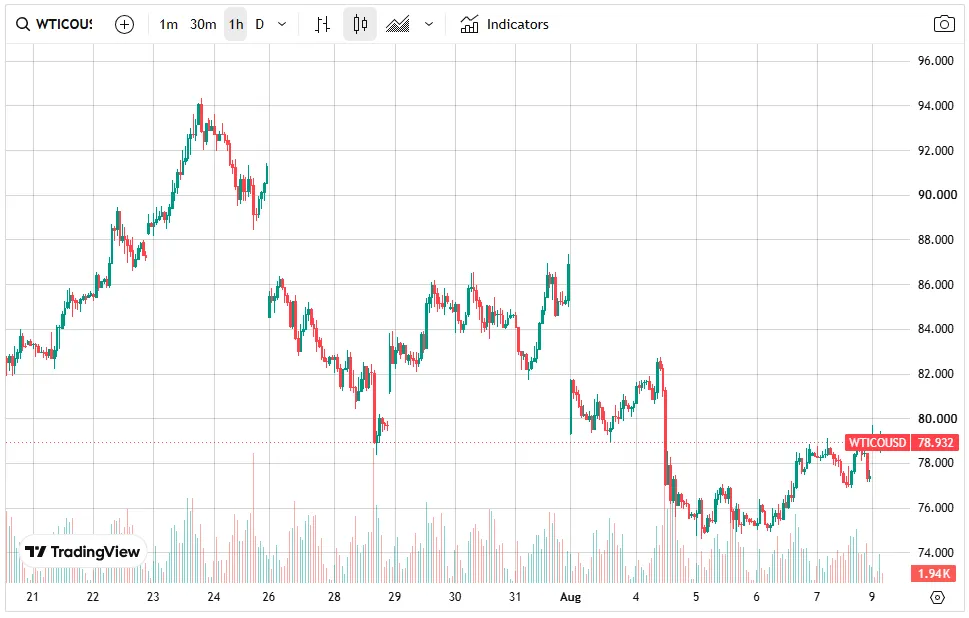
Oil prices rose on Monday as uncertainty over the reopening of the Strait of Hormuz outweighed progress in talks between Iran and Oman. Brent crude gained $1.20, or 1.44%, to $84.79 a barrel by 2206 GMT, while US West Texas Intermediate rose $1.12, or 1.08%, to $79.29.
Market Snapshot
The gains extended a recent recovery in crude prices, with traders continuing to price a risk premium into contracts while commercial shipping through the strategic waterway remains disrupted.
Earlier in the session, Brent rose 91 cents, or 1.09%, to $84.46 a barrel by 0056 GMT. WTI was up 61 cents, or 0.78%, at $78.79. The market’s response showed that a possible shipping agreement has not yet convinced traders that normal oil flows will return soon.
Event Details
Iran said on Sunday that an agreement with Oman defining new shipping lanes through the strait was in its final stages. Iranian Foreign Minister Abbas Araqchi said the arrangement would establish routes to be used once additional conditions had been met.
Tehran has also said the waterway will not fully reopen until Washington takes further steps, including compensation linked to attacks on Iran. The United States has maintained that the Strait of Hormuz is an international waterway and that commercial vessels should be able to transit without restrictions or fees.
That leaves key questions unresolved, including who would supervise the proposed lanes, how vessels would be protected and when shipping companies could resume regular operations.
Trading Reaction
Oil traders have reacted cautiously to each new diplomatic signal after previous efforts to restore traffic failed to produce a sustained return to normal shipping.
“Traders have been conditioned by the on-again, off-again nature of the negotiations and are waiting for tangible evidence, such as verified tanker movements or formal agreements, before further unwinding the risk premium,” said Tim Waterer, chief market analyst at KCM Trade.
The structure of the futures market also points to concern about near-term supply availability. Prompt Brent contracts have traded at a premium to later deliveries, suggesting that buyers remain focused on immediate logistical risks rather than a potential surplus once the waterway reopens.
Background Context
The Strait of Hormuz connects the Persian Gulf with the Gulf of Oman and the wider Indian Ocean. About 20.5 million barrels per day of crude, condensate and oil products passed through the waterway in January to September 2023, representing roughly one-fifth of global oil consumption.
The route is also critical to liquefied natural gas markets. Qatar sends almost all of its LNG exports through the strait, while around 20% of global LNG flows use the waterway each year. Any prolonged disruption could therefore affect crude, refined products, LNG freight rates and energy costs across Asia and other importing regions.
The latest uncertainty has persisted despite signs of diplomatic progress. Iran and Oman have been discussing a designated route, but Tehran’s insistence on additional US concessions has raised doubts about whether a limited arrangement would result in a full reopening.
Outlook
Traders will watch for a formal Iran-Oman announcement, confirmation that the United States accepts the proposed operating arrangements and evidence of sustained tanker movements through the strait.
They will also monitor freight rates, insurance costs and regional crude differentials. Until vessels begin moving reliably, markets are likely to remain sensitive to political statements and vulnerable to further price swings.