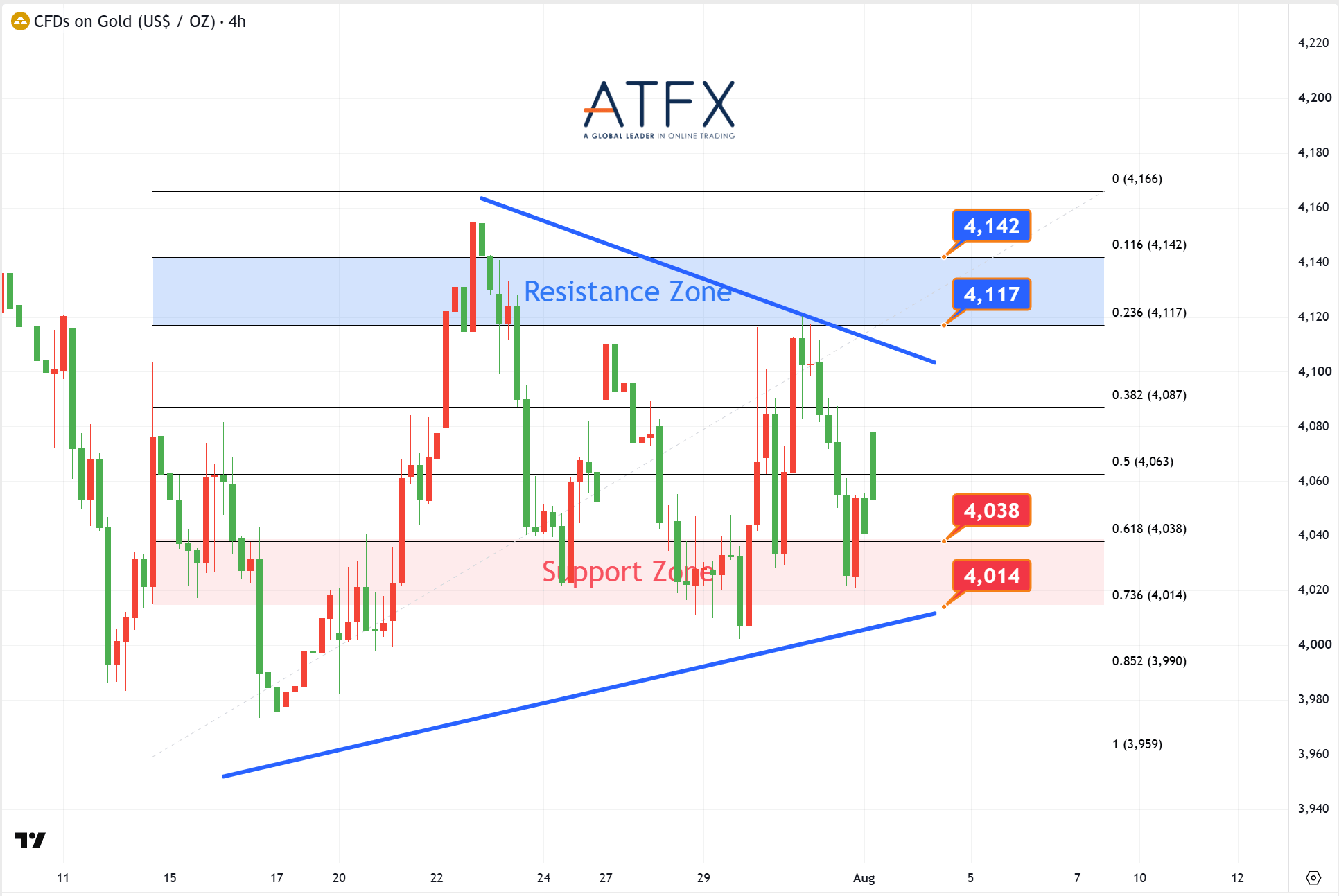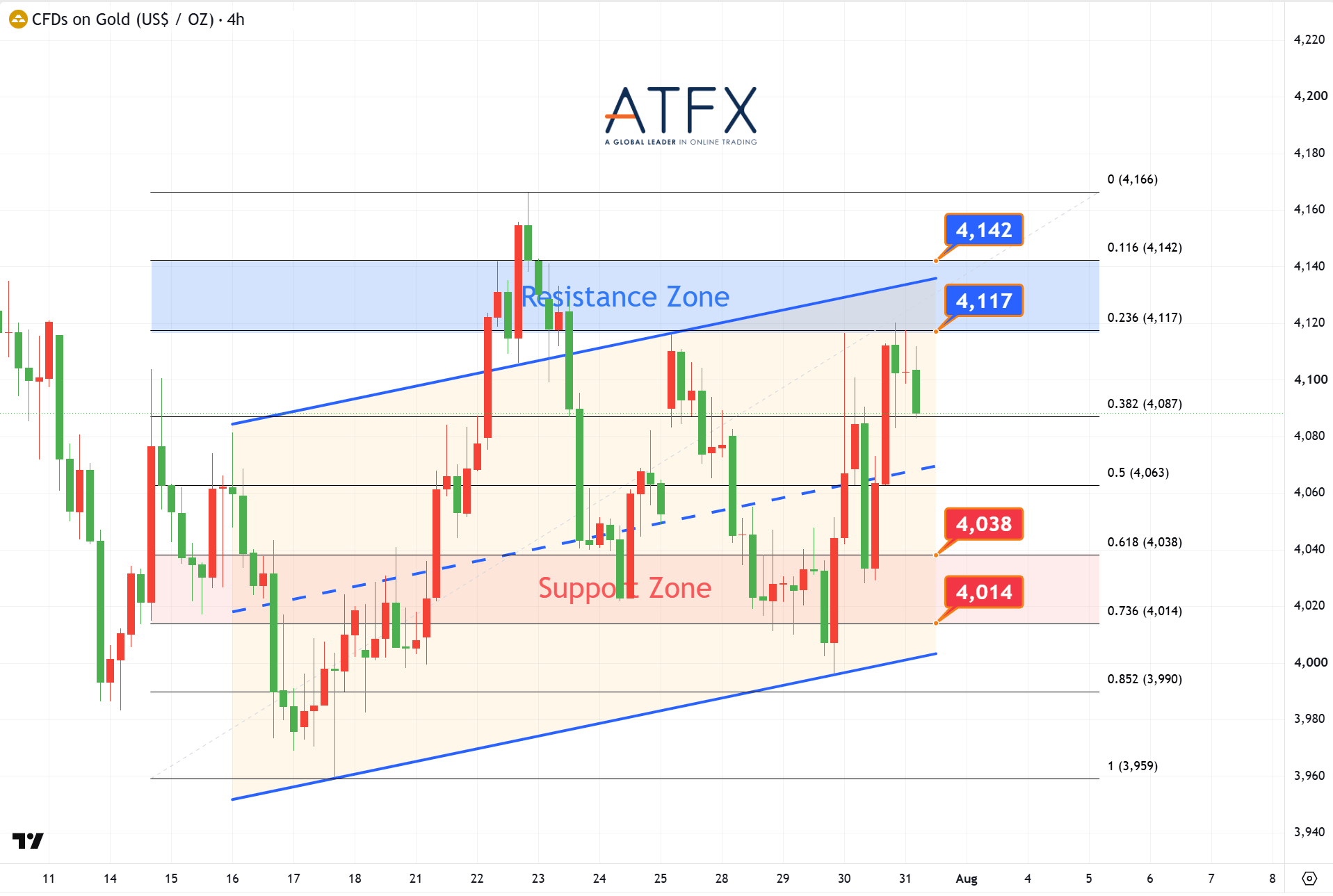



Gold rose on Monday after US President Donald Trump postponed a planned attack on Iran and said negotiations would begin later in the day. Spot bullion gained 0.7% to $4,067.06 an ounce by 0023 GMT as falling oil prices eased concerns about inflation and higher interest rates.
Market Snapshot
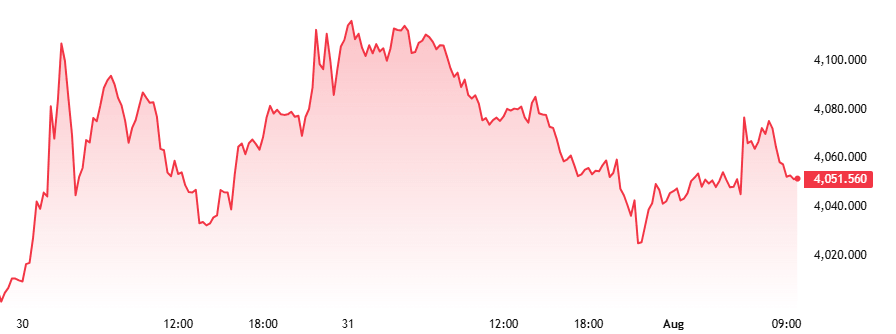
US gold futures climbed 0.9% to $4,065.60 an ounce. Silver rose 0.7% to $58.02, platinum gained 0.7% to $1,653.78 and palladium advanced 1.5% to $1,293.00.
Brent crude fell more than 6% to $82.41 a barrel by 0103 GMT as traders removed part of the geopolitical risk premium built into energy markets. The US Dollar Index also slipped below 100, making dollar-denominated gold less expensive for buyers using other currencies.
Trump Holds Back Strikes
Trump said Iran and other Middle Eastern countries had requested additional time to complete an agreement aimed at reopening the Strait of Hormuz and addressing concerns over Tehran’s nuclear programme. He later said negotiations would begin on Monday afternoon but did not identify the location, participants or a deadline.
The announcement followed several days of renewed threats from Washington and Tehran. Trump has repeatedly delayed military action to allow diplomacy to continue, although previous attempts to secure a lasting settlement have broken down.
Iranian Foreign Minister Abbas Araqchi held discussions with officials from Saudi Arabia and Pakistan, while negotiations with Oman over maritime arrangements were reported to be in their final stages. Tehran said those discussions concerned a new shipping route and were separate from the broader question of fully reopening Hormuz.
Lower Oil Supports Bullion
Gold has faced an unusual market environment during the US-Iran conflict. Geopolitical instability typically strengthens demand for defensive assets, but disruptions to oil supplies have also increased inflation expectations and encouraged speculation that central banks could raise interest rates.
The sharp decline in crude prices reduced some of that pressure. Lower energy and transport costs could slow inflation, weaken government bond yields and limit the case for further monetary tightening. Those conditions generally support gold because bullion pays no interest.
Linh Tran, a market analyst at XS.com, said gold remained in a transitional phase and that recent gains looked “more like a technical rebound”. She said the dollar, Treasury yields and incoming US employment data were likely to influence prices more than the traditional haven narrative in the near term.
Hormuz Remains Critical
The Strait of Hormuz carried about 20% of global oil and liquefied natural gas supplies before the conflict. Iran’s restrictions and attacks on commercial vessels have discouraged tankers from entering the Gulf, lifting freight costs and contributing to a rise of more than 20% in Brent and West Texas Intermediate crude during July.
Traffic remained disrupted despite the latest diplomatic signals. Maritime authorities reported three additional attacks on tankers from Saturday, while shipping data showed that vessel movements through Hormuz had slowed.
“The bigger focus is whether this week turns into a rinse and repeat of last week,” IG market analyst Tony Sycamore said. He warned that optimism could fade if negotiations failed or attacks on US facilities and commercial shipping resumed.
Fed Outlook Stays Uncertain
The Federal Reserve left its target rate unchanged at 3.50% to 3.75% on 29 July. Three policymakers dissented and supported an immediate quarter-point increase, citing inflation that remained above the central bank’s 2% objective.
The decline in oil may weaken the argument for another increase, but policymakers will require evidence that broader price pressures are easing. Labour-market strength could also keep wage inflation elevated and support tighter policy.
Markets will assess US job openings data on Tuesday, productivity figures on Thursday and the July employment report on Friday. The releases could determine whether gold extends its recovery or remains near the $4,000 level.
Outlook
Traders will watch whether Monday’s US-Iran negotiations produce a verifiable agreement, whether tanker traffic through Hormuz begins to recover and whether crude prices remain below recent highs.
The dollar, Treasury yields and expectations for the Federal Reserve’s September meeting will provide further direction. A durable diplomatic settlement and lower oil prices could support gold through reduced rate pressure, while renewed military action could revive both haven buying and inflation concerns.