



The Japanese yen and Nikkei shares will be active on Monday after Japan’s Prime Minister secured a majority in a snap election.
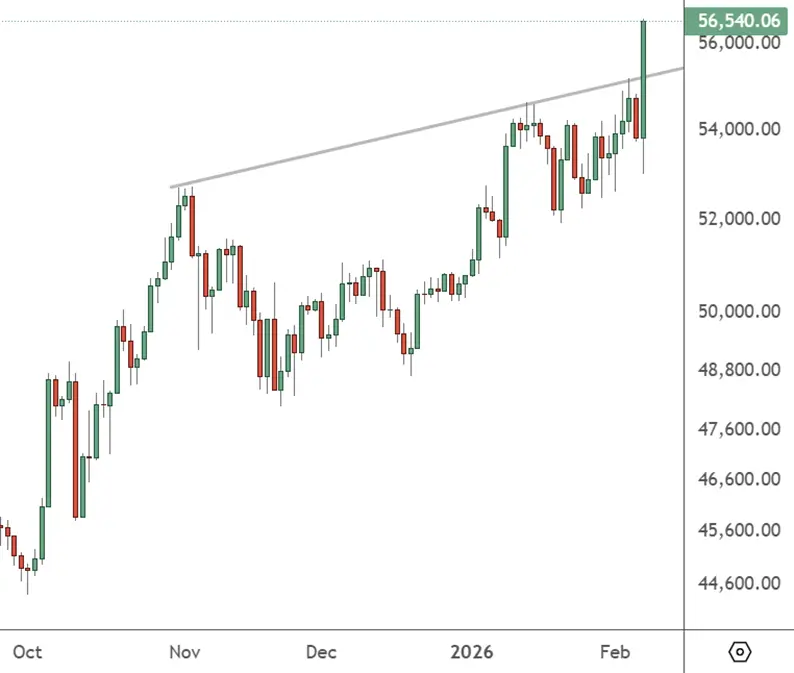
JPN225 – Daily Chart
The JPN225 surged above resistance to close on Friday at 56,540, and that uptrend line will be the defining level for the week ahead.
The coalition was on course to secure the LDP’s largest win since 1996, well above the 233 needed for a majority.
Prime Minister Sane Takaichi is a fan of former Prime Minister Shinzo Abe’s ‘Abenomics’ policies of ultra-loose monetary policy and big spending. She had called the snap election to capitalize on positive sentiment over her policies, including a plan to suspend the country’s 8 percent tax on food and non-alcoholic beverages for two years.
The tax pledge follows the approval of Japan’s largest stimulus package since the pandemic, with a 21.3 trillion yen ($136bn) set to be injected into the economy through cost-of-living relief, such as energy bill subsidies, cash bonuses and food vouchers.
“Prices are going up without tangible increases in income, so people feel that even basic necessities are getting harder to afford,” said Koichi Nakano, an associate professor at Sophia University in Tokyo.
Along with rising prices, “higher taxes and social security contributions in an ageing society with more spending commitments” have put households under growing strain, Nakano said.
However, a larger mandate for Takaichi has investors worried about Japan’s fiscal health after recent cracks in the bond market and a weakening yen.
The Bank of Japan kept its benchmark interest rate at a thirty year high of 0.75% after a hike in December and the tone is for a gradual tightening policy.
The election will clarify some recent uncertainty in the political area but will continue to cause concerns over the path of debt and spending in the country. The food price measures will appease consumers, but it is a short-term relief and will do little for the larger economy.