


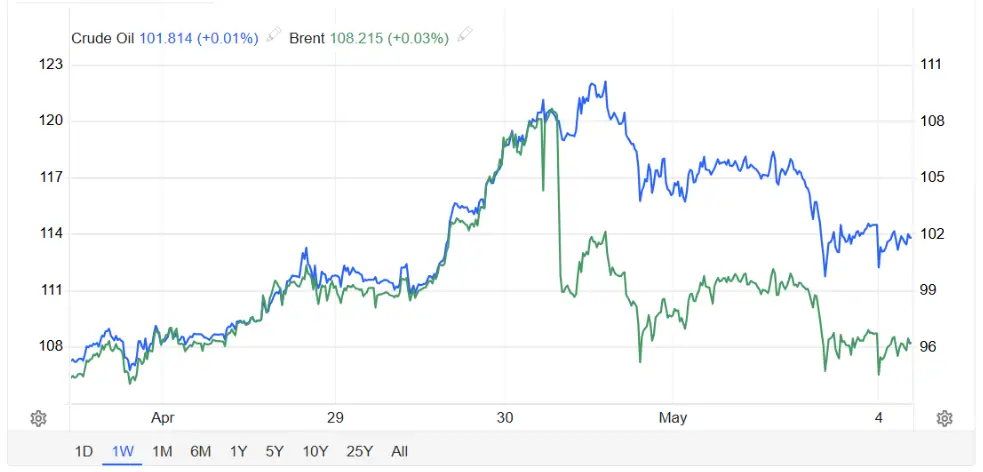
Oil prices eased on Monday after US President Donald Trump said Washington would begin helping to free ships stranded in the Strait of Hormuz, though benchmark crude remained above $100 a barrel as the standoff between the United States and Iran kept supply risks elevated.
Brent crude futures fell 0.59% to $107.53 a barrel by 11:08 p.m. GMT, while US West Texas Intermediate slipped 0.82% to $101.10, extending losses from Friday’s session. Trump said in a post on Truth Social that the US would guide vessels safely out of the restricted waterway “for the good of Iran, the Middle East, and the US,” according to the report.
Strait pressure
The Strait of Hormuz is one of the world’s most important oil transit routes, and any disruption there can quickly ripple through global energy markets. Even after the latest decline, prices stayed supported because traffic through the strait remained limited and no peace deal between Washington and Tehran was in sight.
ANZ analysts said peace talks had stalled as both sides held to their red lines, underscoring how geopolitical risk continued to outweigh signs of near-term diplomatic progress. That leaves traders focused on whether the US move will actually ease shipping bottlenecks or merely signal a temporary attempt to calm markets.
Opec+ backdrop
The oil market was also digesting a separate supply decision from OPEC+, which said on Sunday it would raise output targets by 188,000 barrels per day in June for seven members, the third straight monthly increase. The adjustment was unchanged from May, excluding the United Arab Emirates’ share after it left OPEC on May 1.
Still, the OPEC+ increase may have limited immediate effect if Gulf shipments remain constrained by the crisis around the Strait of Hormuz. That has kept traders wary of fresh volatility, with prices already sharply higher in recent weeks as tensions in the region disrupted flows.