



US chipmaker Nvidia Corp reported quarterly revenue and earnings that exceeded analyst expectations and issued an upbeat sales forecast for the current quarter, yet its share price dipped in after‑hours trading as investors weighed competition and future growth prospects.
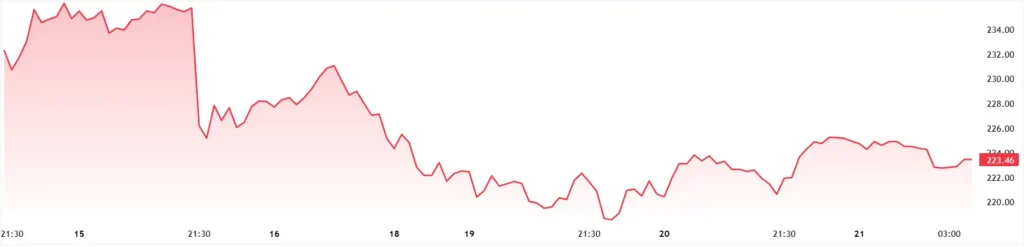
The Santa Clara, California‑based company reported revenue of about $81.6 billion for the first quarter of fiscal 2027, an increase of roughly 85% from a year earlier, and adjusted earnings per share of $1.87, topping Wall Street forecasts. Nvidia also projected second‑quarter revenue of about $91 billion, above analysts’ consensus estimates.
Shares of the world’s largest publicly‑listed company fell about 1.6% in after‑hours trading, reflecting investor caution even after strong fundamentals. Some analysts described the post‑report market reaction as a “knife fight,” noting that expectations for growth in 2027 and 2028 remain high and may already be priced into the stock.
Nvidia also announced an $80 billion share repurchase program and a quarterly dividend increase, signaling confidence in its long‑term cash flow.
The results underscore Nvidia’s dominant position in supplying chips for artificial intelligence and data center infrastructure. Data center sales, the company’s largest segment, accounted for a sizeable share of revenue, driven by demand for advanced AI processing units.
Market reaction suggests investors may be looking beyond headline beats to competitive pressures from rivals such as Advanced Micro Devices, Intel, Google and Amazon, who are developing alternative AI hardware. Rising competition and questions about the sustainability of rapid AI spending are influencing sentiment.
Nvidia’s results are widely viewed as a barometer for the broader AI sector, given the company’s central role in powering major generative AI models and cloud computing infrastructure. Continued strong performance could bolster technology markets, while signs of slowing growth or margin pressures might temper valuations in high‑growth tech stocks.
Investors will also watch Nvidia’s performance in the coming quarters for signals on the duration of the AI investment cycle, particularly as enterprise and hyperscale data center customers adjust spending patterns.