


Gold Movement Overview
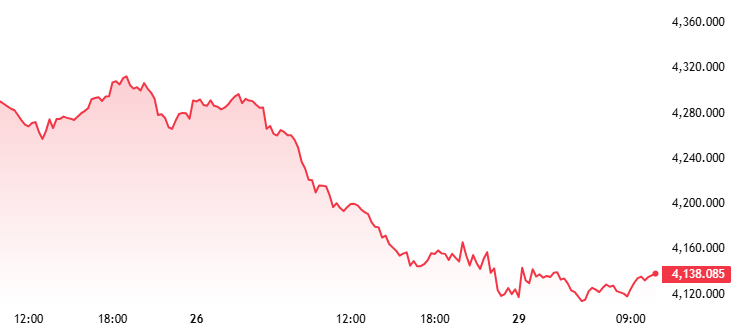
Gold has extended its slide, last trading near $4,115 an ounce, down from around $4,300 earlier in the week, as a firmer dollar, an extended Treasury bond rout, and rising Federal Reserve rate-hike expectations continue to weigh on bullion. Spot gold stood at $4,116.60, down 3.9%, as of 04:47 UTC+8 on 29 September 2026, with chart data showing the metal holding a similar range into the following hours.
Key Driver Behind The Move
A steep rise in borrowing costs and a sharp hawkish repricing of Federal Reserve rate expectations has been the dominant driver of gold’s slide over the past two weeks. The US 10-year Treasury yield climbed to 5.241%, its highest level since June 2007, while the 30-year yield rose to 5.551%, its highest since June 2004. Nearly a fortnight earlier, the Federal Reserve hiked rates for the first time in over three years and signaled further tightening ahead, keeping upward pressure on yields since.
Market Data And Reaction
Markets have sharply repriced the odds of another hike. According to the CME FedWatch tool, the probability of a quarter-point increase in October stood at 70%, up from levels seen just a day and a week earlier. Higher-rate expectations typically weigh on non-yielding assets such as gold while strengthening the dollar, a combination that has made bullion more expensive for buyers using other currencies.
Broader Market Implications
Oil has eased back rather than adding fresh pressure, with Brent last near $99.53 a barrel as of 11:00 UTC+8 on 29 September 2026, retreating from a peak above $103 earlier in the week. The move followed reports that President Trump was open to easing sanctions on Iran in exchange for nuclear concessions, tempering some of the risk premium built into crude after Trump had separately rejected an Iranian proposal to reopen the Strait of Hormuz over the weekend. With oil no longer climbing, the main pressure on gold continues to come from the bond rout and firmer dollar rather than an energy-driven inflation scare.
What Gold Traders Should Watch
- The August Job Openings and Labor Turnover Survey, due Tuesday
- The Personal Consumption Expenditures price index, the Fed’s preferred inflation gauge, due Wednesday
- The September nonfarm payrolls report, due Friday
- Any further developments on Iran’s response to the rejected Hormuz proposal