


Oil prices jumped more than 3% on Monday after the United States and Iran failed to reach an agreement on a Washington-drafted peace proposal, prolonging the closure of the Strait of Hormuz and tightening global energy supplies.
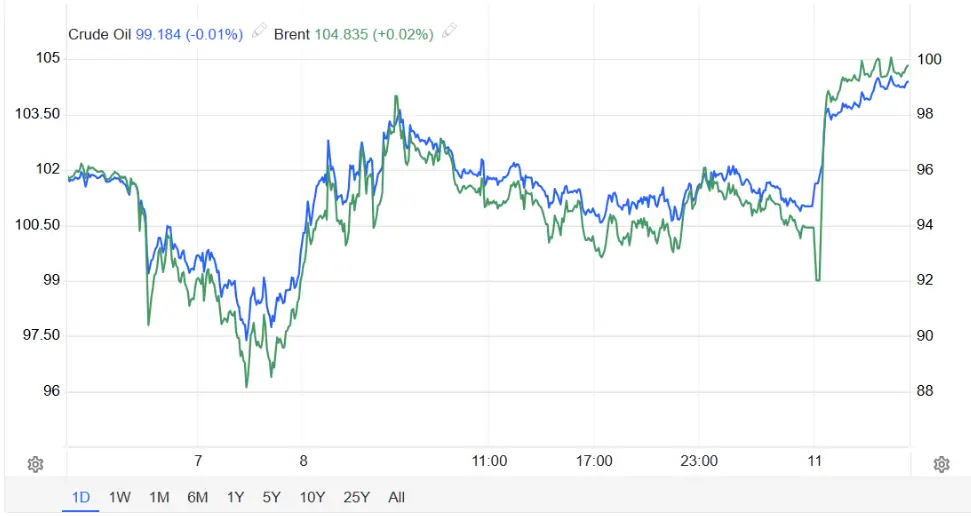
Brent crude futures rose $3.21, or 3.17%, to $104.50 a barrel by 22:03 GMT, while US West Texas Intermediate (WTI) crude climbed $3.06, or 3.21%, to $98.48.
The breakdown in negotiations, which US President Donald Trump rejected as “TOTALLY UNACCEPTABLE,” dashed hopes for a partial ceasefire and the reopening of the strait, a chokepoint for about 20% of global seaborne oil trade.
Conflict Background
Tensions escalated since late February when US-backed actions led to the blockade of Iranian ports and the Strait of Hormuz, stalling shipments and spiking energy costs worldwide.
A fragile truce in early April had briefly eased prices, but repeated negotiation failures have kept supplies constrained, depleting stockpiles and strategic reserves.
Market Impact
The surge reversed recent dips driven by fleeting optimism over talks held in Pakistan, underscoring oil markets’ sensitivity to Middle East geopolitics.
Stock futures edged lower amid inflation fears over higher fuel costs, with energy firms like Aramco reporting higher profits from rerouted pipelines operating at full capacity.
Broader Implications
Prolonged disruption risks pushing prices toward $110 per barrel, analysts warn, fueling global inflation and straining economies dependent on imported oil.
Western nations have deployed warships to the region, while energy leaders flag markets nearing a “cliff’s edge” without resolution.