


Oil prices surged in early trade on Monday after the US said it seized an Iranian cargo ship and Tehran closed the Strait of Hormuz again, reviving fears of supply disruption through the world’s most important oil chokepoint. Brent crude jumped as much as 7% to $97.50 a barrel before easing to $95.71 by 18:56 ET, while the move came after a sharp drop on Friday.
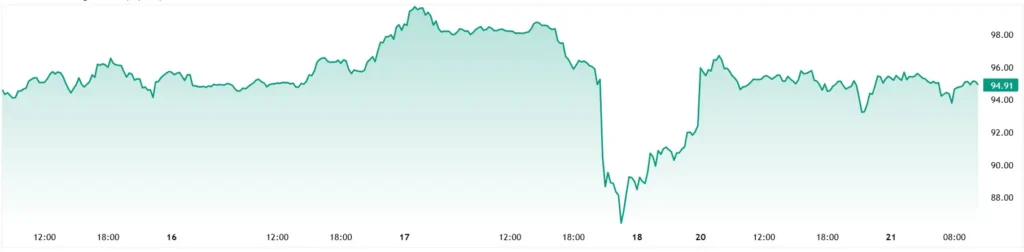
UKOIL – 5 Days Chart
Market snapshot
The rally was concentrated in crude benchmarks as traders priced in a fresh risk premium tied to the Strait of Hormuz. Brent’s intraday gain of as much as 7% followed Tehran’s brief weekend reopening of the channel, then a new closure in less than 24 hours.
West Texas Intermediate was also reported higher in Asian trade, with one market report putting it around $90 a barrel, though verified session data for the latest D-day WTI level was not available in the source set. The speed of the rebound underscored how quickly geopolitical headlines can reverse sentiment in the oil market.
Event details
The US military said it fired on and seized an Iranian-flagged cargo ship that had tried to run a blockade, according to the reports. President Donald Trump said US forces had taken custody of the vessel, while Iran condemned the action and vowed retaliation.
Tehran’s decision to close the Strait again added to the disruption risk, because the waterway handles a large share of global crude flows. The move came after Iran had briefly reopened the channel over the weekend, which had triggered a steep oil selloff on Friday before Monday’s reversal.
Supply risk
The Strait of Hormuz remains central to oil flows, so any sustained closure or threat to navigation tends to lift crude futures immediately. Monday’s gains reflected concern that shipping delays, insurance costs and retaliatory steps could tighten prompt supply even if the disruption proves brief.
For now, the rally was driven by direct supply anxiety rather than broader macro factors, keeping the focus squarely on crude and the regional standoff. Analysts said the market was also reacting to the fact that oil had fallen sharply only days earlier, leaving room for a fast geopolitical squeeze higher.