



Gold Movement Overview
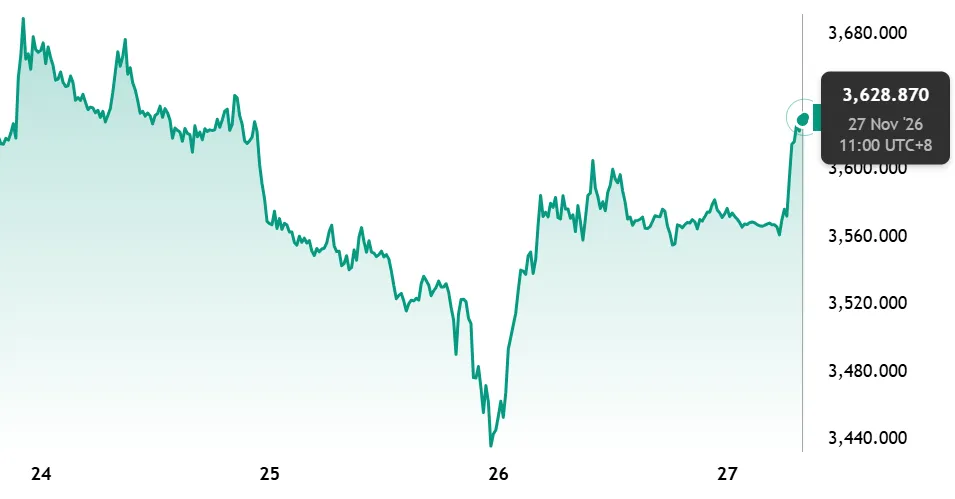
Gold (XAU/USD) briefly rebounded above $3,600 on Thursday after hitting a 15-month low in the previous session, supported by easing liquidation pressure, a partial recovery in US equities and a softer US dollar. The precious metal subsequently pared some of its gains, trading at 3,628.870 per ounce as of 11:00 GMT+8 on 27 November 2026. Despite the recovery from recent lows, expectations of further monetary tightening by the Federal Reserve (Fed) continued to limit upward momentum.
Key Driver Behind The Move
Gold’s rebound followed a partial recovery on Wall Street after concerns over artificial intelligence (AI) valuations triggered widespread selling in technology stocks.
The equity market recovery eased pressure on traders to liquidate gold holdings to cover losses elsewhere or meet margin requirements. Short covering ahead of the US Thanksgiving holiday also contributed to the rebound.
Meanwhile, a retreat in the US dollar and Treasury yields provided additional support for the precious metal, helping gold recover from its recent lows.
Market Data And Reaction
Data from the US Bureau of Economic Analysis showed that the core Personal Consumption Expenditures (PCE) Price Index increased by 3.3% year-on-year in October, while annualised third-quarter gross domestic product (GDP) growth was revised upward to 4.3%.
Persistent inflation and stronger-than-expected economic growth reinforced expectations of a Fed rate hike in December, alongside the possibility of further monetary tightening in January.
Nevertheless, gold managed to recover a portion of its recent losses despite the challenging monetary policy backdrop.
Broader Market Implications
Gold’s rebound highlights the influence of equity market conditions, liquidity and currency movements on precious metal prices.
While higher interest rates increase the opportunity cost of holding non-yielding assets, sustained central bank purchases, investment demand and concerns over government debt sustainability continue to provide longer-term support for gold.
The recent recovery, however, has yet to establish a broader trend reversal, particularly as expectations of further Fed rate hikes remain firmly in place.
What Gold Traders Should Watch
- Traders will closely monitor the US nonfarm payrolls report, due at 21:30 GMT+8 on 4 December 2026, for further indications of labour market resilience.
- The Fed’s interest rate decision, scheduled for 03:00 GMT+8 on 10 December 2026, will also be important in assessing the monetary policy outlook.
- Developments in US equities, the dollar and Treasury yields remain key factors in determining whether gold can sustain its recovery as market liquidity normalises following the Thanksgiving holiday.