


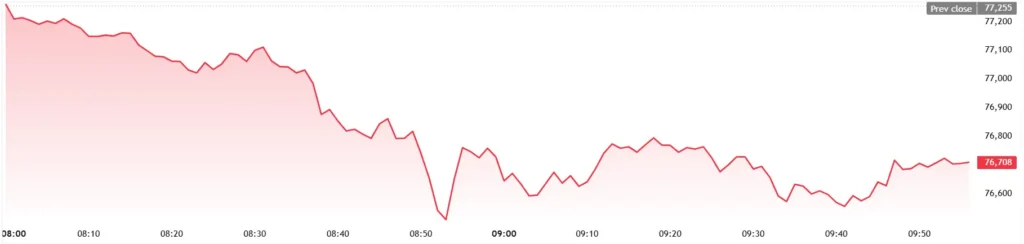
Bitcoin climbed back above 77,000 dollars on Monday, recovering from a near‑month low of about 74,000 dollars over the weekend, as hopes of a US‑Iran peace deal and fresh regulatory progress on crypto derivatives lifted sentiment in digital‑asset markets. The world’s largest cryptocurrency last traded around 77,400 dollars, up roughly 0.6 percent, in early Asia‑time trading.
Why the move matters
The rebound reflects a broader return of risk appetite in global markets, as geopolitical concerns around the Middle East show signs of easing. President Donald Trump this month said a US‑Iran peace memorandum had been largely negotiated, helping calm nerves about a wider conflict and the potential for renewed supply disruptions in global energy markets. Through 2026, Bitcoin has repeatedly reacted to headlines on the Strait of Hormuz and related tensions, underscoring its role as a sensitive barometer of geopolitical risk.
Bitcoin’s price has also been boosted by improving liquidity and a rotation back into higher‑beta assets after a volatile stretch earlier in May. Ether and several altcoins have edged higher alongside the move, indicating that the rebound is not confined to a single top‑tier asset.
Nasdaq options plan adds tailwind
Another key driver has been the US Securities and Exchange Commission’s conditional approval for Nasdaq PHLX to list cash‑settled Bitcoin index options under the ticker QBTC, pending final relief from the Commodity Futures Trading Commission. The SEC’s decision, documented in Release No. 34‑105549 on May 22, marks the first time a US regulator has green‑lit options tied to a broad Bitcoin price index rather than a spot or futures exchange‑traded product.
The contracts will track the CME CF Bitcoin Real Time Index, a dollar‑denominated benchmark that aggregates data from leading exchanges, and will be European‑style, cash‑settled options. Each contract will represent exposure to one Bitcoin, a smaller unit than many institutional futures contracts, which can broaden access for both retail and smaller institutional investors.
Regulatory and market context
The Nasdaq approval deepens the institutionalization of Bitcoin in the US financial system, joining existing Bitcoin futures on the Chicago Mercantile Exchange and growing suite of crypto‑linked ETFs. By using a familiar, regulated index and allowing settlement in dollars, the product helps traditional brokers offer crypto‑linked exposure without requiring clients to custody Bitcoin directly.
However, trading cannot begin until the CFTC grants the required exemptive relief, underlining the overlapping jurisdiction of US securities and commodities regulators on Bitcoin derivatives. The contract’s design, including position limits and cash settlement, is intended to limit systemic risk while expanding hedging and speculative tools for market participants.
Broader implications for crypto and markets
The double boost from geopolitical easing and regulated‑derivative expansion highlights how Bitcoin’s price increasingly reflects both macro risk and structural changes in financial infrastructure. If the Nasdaq‑listed options go live, they could deepen liquidity, narrow spreads, and make it easier for pensions, hedge funds and asset managers to express Bitcoin views within existing compliance frameworks.
At the same time, elevated prices above 77,000 dollars come after a period of choppiness driven by geopolitical headlines and profit‑taking in a market that has more than doubled from its early‑2025 lows. Traders will be watching for any renewed flare‑ups in the Middle East, changes in US fiscal or monetary policy, and the pace of further Bitcoin‑linked product approvals as potential triggers for the next leg of the price move.